
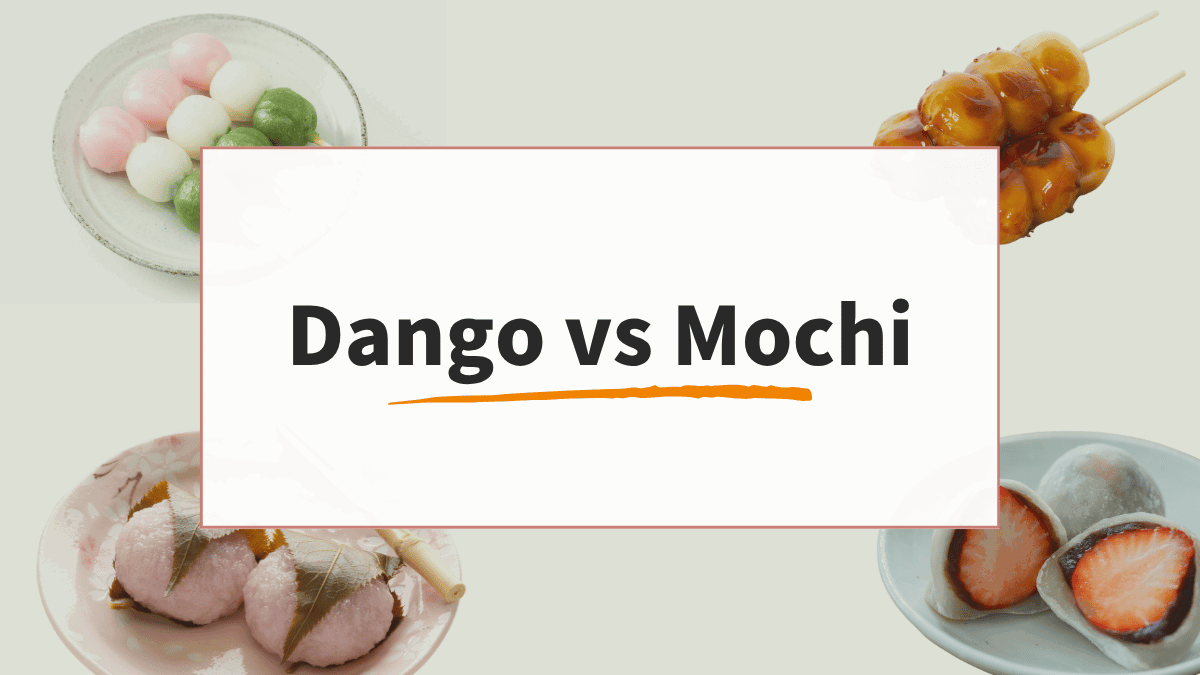
What’s the difference between dango and mochi?
Both are made from rice, but they are actually quite different in texture, ingredients, and how they are eaten.
In this guide, we’ll break it down simply so you can understand the difference at a glance.
Dango vs Mochi (Quick Comparison)
| Feature | Dango | Mochi |
|---|---|---|
| Main ingredient | Rice flour (not fully glutinous) | Glutinous rice (sticky rice) |
| Texture | Firm, chewy, slightly bouncy | Soft, stretchy, sticky |
| Shape | Small balls on a skewer | Blocks, rounds, or filled |
| Cooking method | Boiled | Pounded or steamed |
| Typical use | Street snack, seasonal sweets | Desserts, New Year food |
What is Dango?
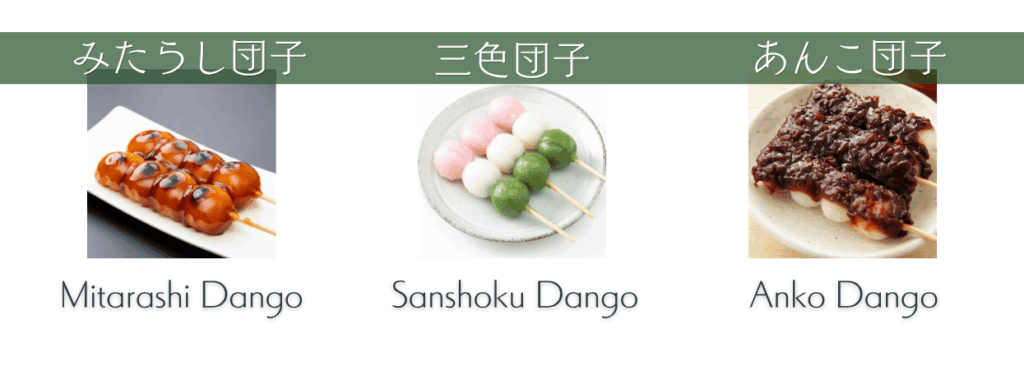
Dango is a traditional Japanese sweet made from rice flour.
It is shaped into small balls and usually served on a skewer.
It has a firm and slightly chewy texture, and is often enjoyed with sweet soy sauce (mitarashi) or during seasonal events like cherry blossom viewing.
Mitarashi Dango(みたらし団子)
Mitarashi dango is covered in a sweet and savory soy sauce glaze.
It has a rich, slightly salty-sweet flavor and a glossy appearance.
This is one of the most common types of dango found at street stalls.
Sanshoku Dango(三色団子)
Sanshoku dango is a colorful dango made of three balls—pink, white, and green.
It is especially popular during cherry blossom season (hanami).
Each color represents spring and is more about appearance than flavor.
Anko Dango(あんこ団子)
Anko dango is topped with sweet red bean paste.
It has a soft sweetness and is perfect for those who enjoy traditional Japanese flavors.
You may also find variations with different toppings like sesame or kinako.
What is Mochi?
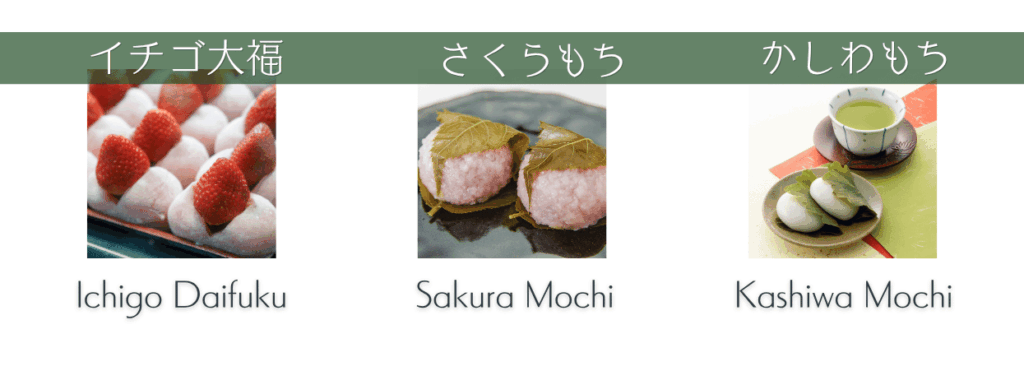
Mochi is made from glutinous rice (also known as sticky rice), which gives it a soft and stretchy texture.
It is much softer and stickier than dango, and can be eaten plain, grilled, or filled with sweet red bean paste (daifuku).
Mochi is also an important part of Japanese New Year traditions.
Daifuku(大福)
Daifuku is a type of mochi filled with sweet red bean paste or fruit.
One popular variation is ichigo daifuku, which contains a whole strawberry inside.
It has a soft outer layer and a sweet, flavorful filling.
Sakura Mochi(さくらもち)
Sakura mochi is a pink mochi filled with red bean paste and wrapped in a salted cherry blossom leaf.
It is a seasonal sweet enjoyed in spring, especially during cherry blossom season.
The slightly salty leaf adds a unique contrast to the sweetness.
Kashiwa Mochi(かしわもち)
Kashiwa mochi is a mochi filled with sweet red bean paste and wrapped in an oak leaf.
It is traditionally eaten on Children’s Day (May 5th) in Japan.
The oak leaf is not eaten, but it symbolizes family prosperity.
Which One Should You Try?
In short:
- Dango is made from rice flour and has a firmer texture
- Mochi is made from glutinous rice and is soft and stretchy
If you prefer something light and slightly chewy, try dango.
If you like soft and stretchy desserts, mochi might be your favorite.
Both are delicious, so the best way is to try both and see which one you like!