
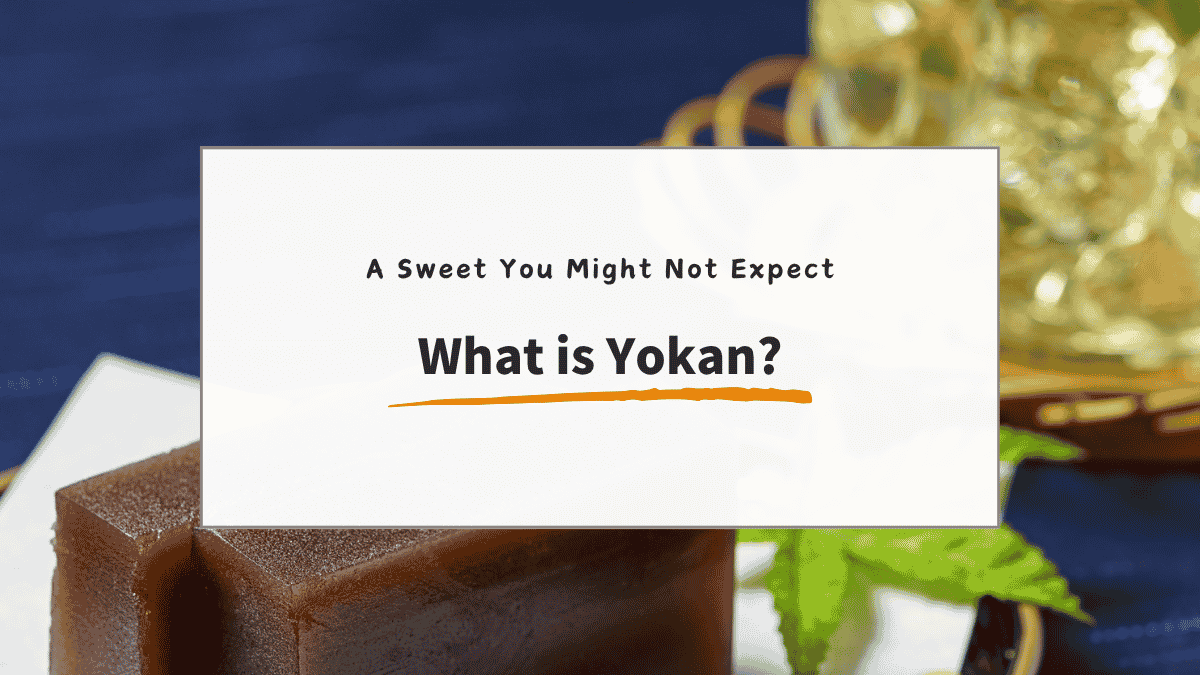
At first glance, yokan can be a little mysterious.
It is dark, firm, and often sold in elegant boxes — but what does it actually taste like?
If you are visiting Japan, you may see yokan in department stores, traditional sweet shops, or gift sections. Many Japanese people enjoy it with tea, especially older generations.
In this guide, we’ll explore what yokan is, why it has been loved in Japan for centuries, the different types of yokan, and whether it is worth trying (or bringing home as a souvenir).
What is Yokan?
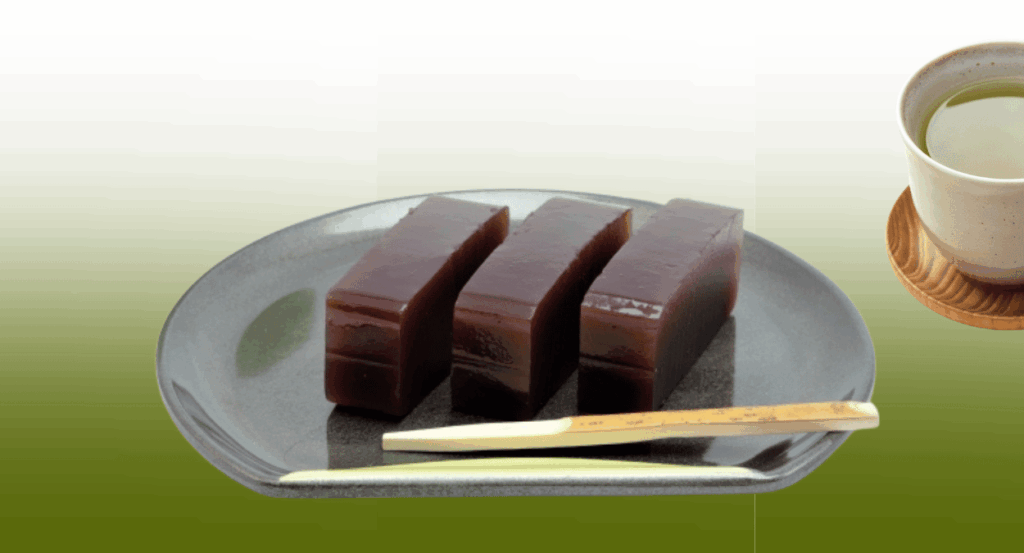
Yokan is a traditional Japanese sweet made mainly from:
- red bean paste (some yokan use white bean paste as a base)
- sugar
- agar (a plant-based ingredient that gives yokan its firm texture)
Unlike cakes or chocolate desserts, yokan has a dense and smooth texture that can feel unfamiliar to first-time visitors to Japan. It is usually sliced into small pieces and often enjoyed with green tea.
A Brief History of Yokan
Yokan has a long history in Japan that dates back several centuries.
It is believed that yokan originally came from China and was introduced to Japan by Buddhist monks. Over time, it evolved into a uniquely Japanese sweet made with red bean paste, sugar, and agar.
During the Edo period (1603–1868), yokan became popular among people in Japan, especially as tea culture grew.
Today, yokan is still enjoyed across Japan — from traditional tea gatherings to everyday snacks.
What Does Yokan Taste Like?
Yokan has a smooth, dense texture and a sweetness that is different from many Western desserts.
The sweetness can be quite rich, which is why yokan is usually served in small slices and often enjoyed with hot green tea.
Some people may find yokan surprisingly firm at first bite, while others enjoy its soft, jelly-like texture. Different types of yokan also have different textures — some are dense and rich, while others, such as mizu yokan, are lighter and more refreshing.
Different Types of Yokan
There are several types of Yōkan in Japan, and the texture and sweetness can vary depending on the ingredients and season.
Neri Yokan
Neri yokan is the most common type. It has a firm, dense texture and is made by slowly cooking bean paste, sugar, and agar together. This is the type often sold in beautifully packaged blocks or gift boxes.
Mizu Yokan (popular during summer)
Mizu yokan is a softer and lighter version made with more water. It has a smoother, more delicate texture and is especially popular during Japan’s hot summer months because it feels cool and refreshing.
It is typically available from around May to August, when people look for cooler and lighter desserts.
Flavored Yokan
Some yokan include additional flavors or ingredients such as matcha, chestnuts, sweet potato, honey, or black sugar. Tea-flavored yokan and seasonal varieties are often sold by traditional sweet shops and department stores across Japan.
Why Do Older Japanese People Love Yokan?
Many older Japanese people grew up eating Yokan as a familiar everyday sweet.
For some, yokan brings back memories of quiet tea times at home, visits to grandparents’ houses, or traditional gifts shared during holidays and special occasions.
My grandmother loved yokan. Whenever we visited her, she would often serve small slices of yokan with hot green tea. As a child, I thought it was a very “grown-up” sweet compared to cakes or chocolate desserts.
Today, I understand why many older generations still enjoy it. Yokan is rich but simple, and its sweetness pairs especially well with slightly bitter green tea. It has a calm and nostalgic feeling that many people associate with traditional Japanese culture.
Is Yokan a Good Souvenir?
Yōkan can make a beautiful and uniquely Japanese souvenir, especially for people interested in traditional Japanese sweets and tea culture.
PROS
- Many yokan are sold in elegant packaging, making them popular gifts in Japan
- Many varieties have a relatively long shelf life compared to fresh desserts
- Small individually wrapped yokan are easy to share
CONS
- Yokan can be surprisingly heavy because of its dense texture
- Some people unfamiliar with sweet bean desserts may find the flavor or texture unusual at first
Where Can You Buy Yokan in Japan?
Yōkan is widely available across Japan, and you can easily find it in several places during your trip.
Where to Find Yokan
- Department store food halls (depachika)
A wide selection of beautifully packaged yokan from well-known brands like Toraya(とらや), Tsuruya Hachiman(鶴屋八幡). - Traditional wagashi (Japanese sweets) shops
Often carry seasonal and locally made varieties - Train stations and souvenir shops
Convenient options for last-minute gifts
- Toraya (とらや) – Official website (English available)
- Tsuruya Hachiman (鶴屋八幡) – Official website
Buying Online (Important Tip)
- You can also find yokan on Amazon Japan
- Always check that the seller is the official store (for example, Toraya)
- This helps ensure you are getting an authentic product
Final Thoughts
Yōkan may look simple at first, but it carries a long history and a quiet charm that reflects Japanese culture.
It might not be the first sweet you reach for, but when enjoyed slowly with tea, it offers a different kind of experience — one that many Japanese people have appreciated for generations.
If you come across yokan during your trip, it may be worth trying at least once to discover this traditional side of Japan.