
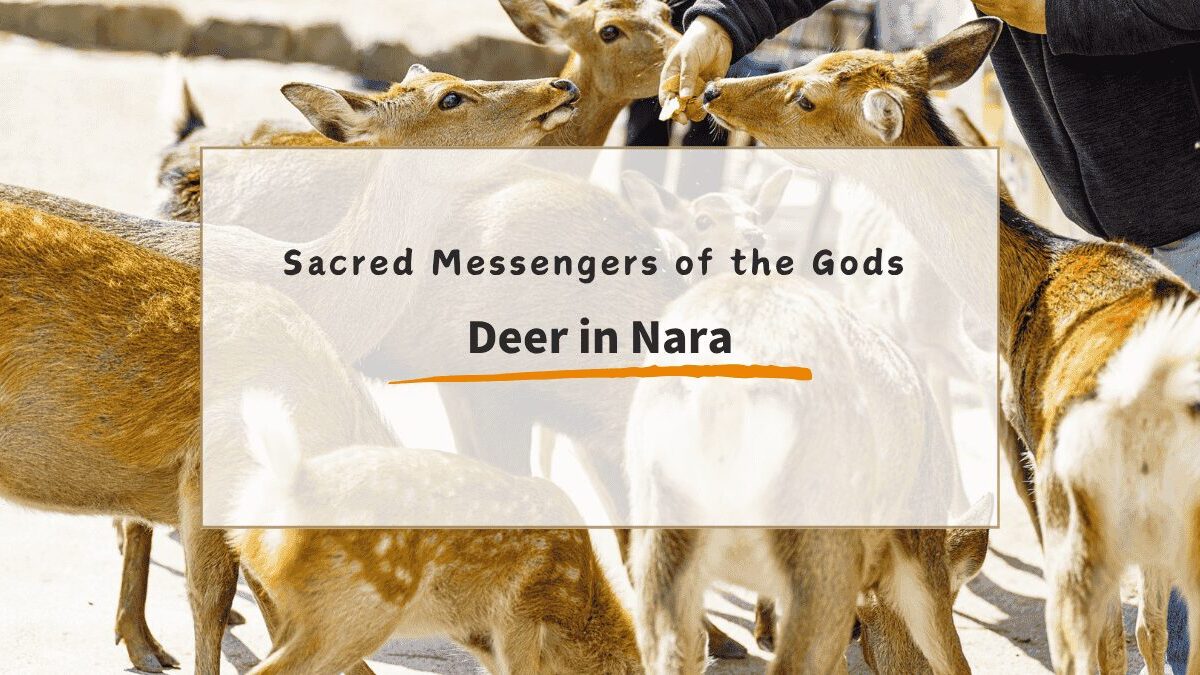
You might have seen photos of deer peacefully wandering through temple gates in Nara — Japan’s ancient capital.
They bow to visitors, walk calmly beside tourists, and seem to belong to another world entirely.
But these deer aren’t just cute; they carry centuries of legend and meaning.
In this story, you’ll discover why the people of Nara call them “messengers of the gods,” and how you can experience their gentle presence with respect and care.
The Legend of the Sacred Deer
Long before Kyoto became Japan’s imperial center, Nara was home to the country’s earliest capital and the heart of ancient spirituality.
Among its many shrines, Kasuga Taisha stands as one of the most sacred.
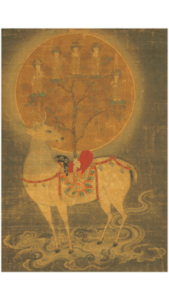
According to legend, when the deity Takemikazuchi-no-Mikoto traveled from Kashima Shrine (in today’s Ibaraki Prefecture) to protect Nara, he arrived riding a white deer.
From that moment, deer were revered as sacred messengers of the gods.
Even today, this belief lives on.
When you walk beneath Kasuga Taisha’s hundreds of stone lanterns, you may feel a quiet connection to that ancient story — a harmony between nature, faith, and time that still defines Nara’s spirit.
Are Nara’s Deer Wild?
Yes — the deer of Nara are considered semi-wild.
They live freely throughout the city, especially in Nara Park, Kasuga Taisha Shrine, and Todaiji Temple, where the Great Buddha resides.
Though they often stroll peacefully among people, these deer are not tamed or trained.
They choose to stay close because generations of locals have treated them with care and respect.
Around 1,200 deer live in and around Nara Park today.
They are cared for and protected year-round by the Nara Deer Preservation Foundation.
Recognized as a National Natural Monument, the Nara deer are an important part of Japan’s cultural heritage and are protected by law.
Be Mindful When You Meet the Deer
- 🦌Remember — they are wild animals.
The deer of Nara may be friendly, but they are still living, breathing creatures of nature. - 🌸Spring: Mothers protect their newborn fawns and may act defensively if you get too close.
- 🍁Autumn: Male deer can be more aggressive during the mating season.
- 🚶♀️Walk calmly and avoid sudden movements.
Sudden gestures or loud noises can startle them. - 💛Show kindness and respect.
Only Deer Crackers Are Allowed!
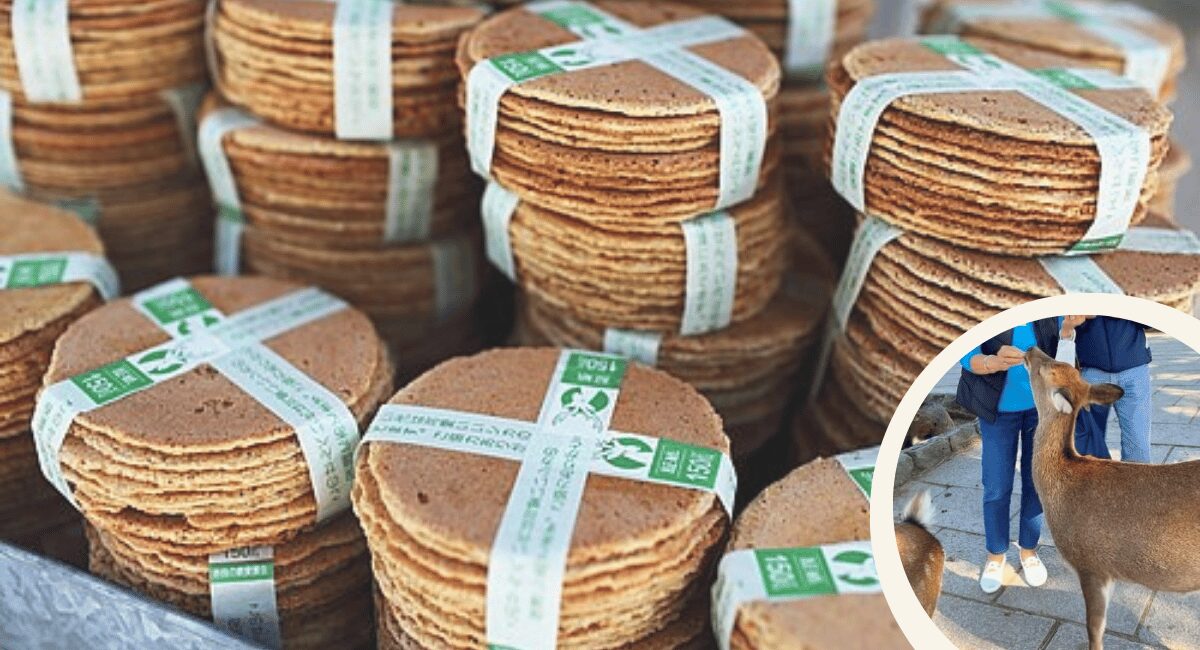
When visiting Nara Park, you’ll see vendors and small vending machines selling shika senbei (鹿せんべい)— the famous deer crackers made from flour and rice bran.
Deer crackers are the only food visitors are allowed to feed the deer.
Feeding the deer can be a memorable experience — they may even bow politely before taking a cracker!
But please keep these tips in mind:
- Feed only deer crackers sold by official vendors inside Nara Park.
- Bow gently before feeding. Some deer will bow back — it’s a charming local tradition.
- Offer one cracker at a time and hold it flat in your hand.
- Don’t feed other food like bread, snacks, or fruit — they can make the deer sick.
- Avoid plastic bags or paper — curious deer may try to eat them.
- Be cautious with small children. Deer can get close quickly, especially if they see food.
- Keep your distance if a deer becomes pushy. Step back slowly instead of running.
Deer-Watching Spots in Nara
The deer of Nara wander freely through temples, shrines, and quiet paths shaded by ancient trees.
Each place offers a slightly different atmosphere — from peaceful encounters in the forest to playful moments among families and friends.
Here are some of the best spots to meet them:
Nara Park(奈良公園)
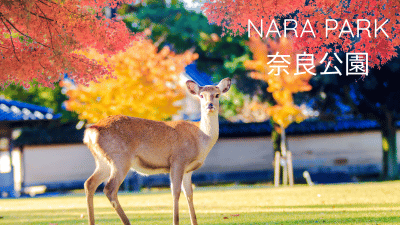
You’ll find them resting under trees, crossing paths with visitors, or gently bowing for deer crackers.
Todaiji Temple(東大寺)

Home to the Great Buddha, this UNESCO World Heritage site is surrounded by deer that add to its spiritual presence.
Kasuga Taisha(春日大社)
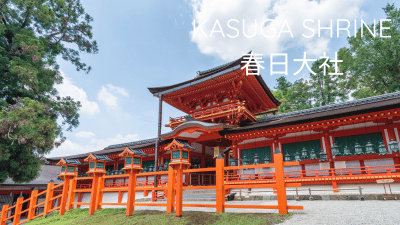
A sacred forest where lanterns, moss, and deer coexist in harmony.
Conclusion
Meeting the deer of Nara is more than just a tourist activity —
it’s a quiet reminder of Japan’s ancient harmony between nature and spirit.
These gentle creatures have walked beside people for over a thousand years,
linking the divine stories of the past with the peaceful moments of today.
May your time in Nara be calm, meaningful,
and filled with small moments of wonder —
just like the graceful deer who call this sacred city home.
👉 Continue Exploring Nara
If you’d like to learn more about Nara’s culture and spiritual heritage, you may also enjoy: