
Your trip to Japan is coming up—but one question might still be bothering you:
“How will my phone work in Japan?”
SIM cards, eSIMs, pocket Wi-Fi…
You may have seen these terms, but if they feel confusing or unfamiliar, you’re not alone.
This guide is for travelers who are starting from zero.
We’ll explain, in simple terms, how phone connectivity works in Japan and what your main options are—so you can choose what feels right without stress or technical knowledge.
Why your phone doesn’t automatically work overseas
Your phone works at home because it’s connected to a local mobile network through your carrier.
When you travel to another country, that connection doesn’t automatically carry over.
In Japan, the signal comes from mobile networks run by different companies.
Your phone needs permission to use a local network—and without it, mobile data simply won’t work.
To use your phone in Japan, you need a way to connect to a local network—either by renting a Wi-Fi device or by using a Japanese SIM or eSIM.
Once you understand this, the different options start to make much more sense.
The 3 main ways to use your phone in Japan
For travelers visiting Japan, there are really just three common ways to use your phone:
renting a pocket Wi-Fi device, using a SIM card, or using an eSIM.
Each option works in a slightly different way, and none of them are “right” or “wrong.”
The best choice simply depends on what feels easiest and most comfortable for you.
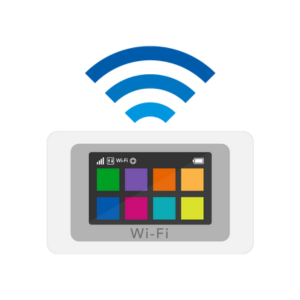
- Pocket Wi-Fi: A portable device that creates a personal Wi-Fi network, allowing multiple devices to connect at once.

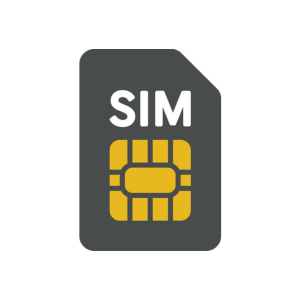
- SIM Card: A small card that you insert into your unlocked phone, providing cellular data directly to your device.
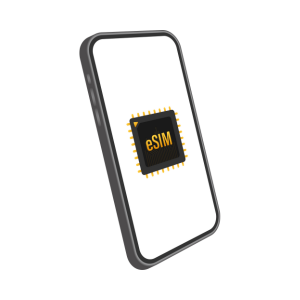
- eSIM: An eSIM (embedded SIM) is a digital SIM that is built into your device, meaning there’s no physical card to insert or remove.
You may also hear about international roaming, which lets you use your phone overseas with your regular mobile plan.
While roaming can be convenient, it often comes with very high data charges and unexpected fees. For this reason, many travelers choose one of the options above instead.
How to Decide Between a SIM Card, eSIM, and Pocket Wi-Fi
There is no single “best” option that works for everyone.
The right choice depends on what feels easiest and most comfortable for you.
Instead of focusing on technical details, it helps to think about how you plan to use your phone during your trip.
Choose Pocket Wi-Fi if you want the simplest setup
Pocket Wi-Fi is often the easiest option, especially if you don’t want to change any settings on your phone.
You simply turn on the device and connect to it like regular Wi-Fi.
It also works well if you’re traveling with family or friends, since multiple devices can connect at the same time.
If you prefer a setup that feels familiar and doesn’t require touching your phone’s SIM settings, Pocket Wi-Fi can be a comfortable choice.
Choose a SIM card if you want local mobile data on your phone
A SIM card lets your phone connect directly to a Japanese mobile network.
This means you don’t need to carry an extra device once it’s set up.
However, your phone must be unlocked to use a SIM card.
If you’re not sure whether your phone meets this requirement, it’s a good idea to check before your trip.
You can find a simple step-by-step guide here:
Choose an eSIM if you want a digital, no-hardware option
An eSIM works like a SIM card, but without a physical card.
You usually set it up by scanning a QR code, and there’s nothing to insert or remove.
This option is popular with travelers who want to keep their luggage light and avoid carrying extra devices.
That said, not all phones support eSIM, so checking compatibility in advance is important.
| Feature | SIM Card | eSIM | Pocket Wi-Fi |
|---|---|---|---|
| Requires Physical Device | ✅ | ❌ | ✅ |
| Can Be Set Up Before Arrival | ❌ | ✅ | ❌ |
| Works with Multiple Devices | ❌ | ❌ | ✅ |
| Requires Unlocked Phone | ✅ | ✅ | ❌ |
| Easy to Share Connection | ❌ | ❌ | ✅ |
| Best for Groups | ❌ | ❌ | ✅ |
| Minimal Setup | ❌ | ✅ | ✅ |
If one option stands out, the next step is to check whether your phone supports it and how much data you might need.
Common concerns—and how to avoid problems
- Q“I’m not sure if my phone supports SIM or eSIM.”
- A
That’s very common. Before choosing anything, it’s important to check what your phone supports.
This simple guide shows how to check in just a few steps.
How to Check If Your Phone Supports eSIM
- Q“The setup sounds complicated.”
- A
Most options are easier than they sound, especially if you prepare before your trip.
Seeing a real setup example can make things much clearer.
How to Buy a Klook eSIM for Japan (Real Purchase Walkthrough)
- Q“What if my phone doesn’t work when I arrive in Japan?”
- A
This usually happens when setup is left until after arrival, or when the cellular data settings aren’t switched over correctly. If your eSIM doesn’t connect right away, there are a few quick things to check. How to Buy a Klook eSIM for Japan covers exactly what to do in the “If your data doesn’t connect right away” section.
Conclusion
Figuring out how to use your phone in Japan can feel confusing at first—especially if terms like SIM cards or eSIMs are new to you.
But once you understand the basic idea, it becomes much less intimidating.
As a simple guideline:
Pocket Wi-Fi may be a good choice if you…
- want the easiest setup with minimal phone settings
- are traveling with family or friends and need to connect multiple devices
- prefer something that works right away, like regular Wi-Fi
A SIM card may work well if you…
- want your phone to connect directly to a local network
- don’t want to carry an extra device
- are comfortable swapping a SIM card and know your phone is unlocked
An eSIM may be a good option if you…
- want a fully digital setup with no physical SIM
- like preparing everything before your trip
- want to travel light and avoid extra devices